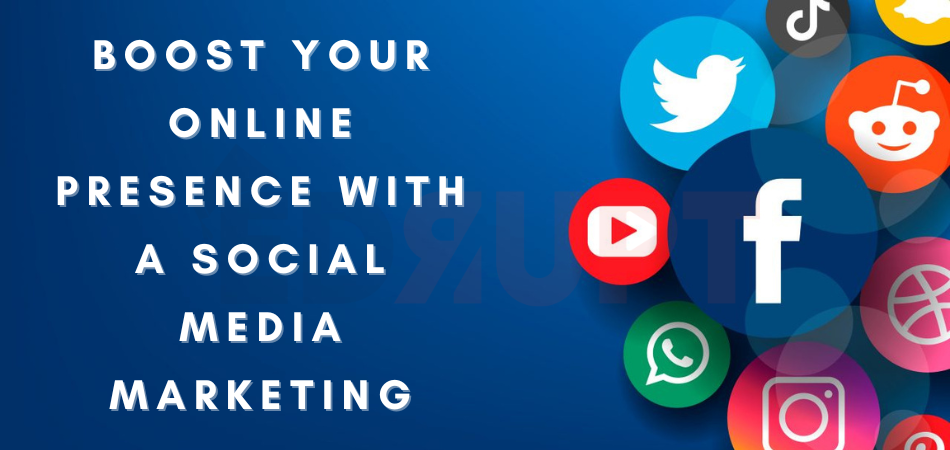
Boost Your Online Presence with a Social Media Marketing Course
Key Program Highlights
- 94% placement rate within 90 days of course completion (2025–2026 batch data)
- Average starting salary: ₹3.2 LPA freshers, ₹4.8 LPA career switchers
- 1,200+ students trained since 2020
- 87% course completion rate vs industry average of 62%
- 50+ hiring partner companies
- Batch size: max 25 students (vs 60+ at online-only platforms)
- 100% placement record
- 8 live client projects during training
- Google Ads spend budget: ₹25,000 provided per student for live campaigns
- (T&C Apply)

Last updated: July 3, 2026
Social Media Marketing Course Guide: Essential Training for Small Business Owners
A social media marketing course built for small business owners should teach practical Facebook Ads management and Instagram strategy — not abstract theory. Edrupt’s training focuses on the specific skills that turn ad spend into revenue: audience targeting, content creation, budget allocation, and performance analysis. If you’re a small business owner spending hours on social media with little to show for it, structured education is the fastest route to measurable results.
The need is real and well-documented. According to the U.S. Small Business Administration and LinkedIn’s Small Business Survey, 77% of small businesses already use social media for marketing, customer service, and sales. Yet only 26% of small business owners say they feel confident managing their own social media marketing effectively, per Constant Contact’s “The Marketer’s Toolkit” report (2023). That gap between usage and competence is exactly where the right course makes a difference.
Why do small business owners need formal social media training?
Most small business owners learn social media by trial and error — and the cost of that approach shows up in wasted hours and ad budgets that deliver nothing. Constant Contact’s research found that 61% of small business owners spend six or more hours per week on social media marketing with poor results. A structured social media marketing course replaces guesswork with tested frameworks.
Consider what’s at stake financially. WordStream’s Industry Benchmarks Report (2023–2024) shows that social media advertising delivers an average return of $2.80 for every $1 spent for small-to-medium businesses. Businesses running Facebook Ads see an average conversion rate of 9.21% across all industries. Those returns don’t happen by accident. They come from knowing how to structure campaigns, write compelling ad copy, target the right audiences, and read performance data.
“ROI from social media is less a function of budget and more a function of process. Small businesses that adopt disciplined testing, clear KPIs, and audience-focused creative typically see ROI improvements of 30–50% within months.” — Dr. Elena Morales, Senior Researcher, Social Analytics Lab
Without training, most business owners boost posts randomly, target audiences too broadly, and have no framework for measuring what’s actually working. A course changes that trajectory entirely.
What should a social media marketing course cover for small business owners?
The best social media marketing course for small business owners covers five core areas: platform-specific advertising mechanics, audience research and targeting, content strategy, budget management, and analytics interpretation.
Here’s how those areas break down in practice:
- Facebook Ads Manager setup and campaign structure
- Custom audience creation and lookalike audience building
- Instagram content pillars and Reels strategy
- Ad creative best practices (copy, imagery, video)
- Budget allocation across campaign objectives
- Reading and acting on performance metrics
- A/B testing methodology for ads and organic content
- Retargeting strategies for warm audiences
Edrupt’s curriculum addresses each of these areas with hands-on exercises rather than passive video lectures. The distinction matters. Business owners need to walk away from each module able to immediately apply what they’ve learned to their own accounts.
How do Facebook Ads work for small businesses?
Facebook Ads operate through Meta’s Ads Manager platform, letting businesses create campaigns that target specific demographics, interests, behaviours, and custom audiences. With over 200 million small businesses using Facebook’s tools globally and more than 7 million active advertisers on the platform (Meta Q4 2023 Earnings Report), it remains the most accessible paid social channel for smaller operations.
One reason is cost. The average cost-per-click on Facebook Ads across all industries sits at approximately $1.72, according to LocaliQ’s advertising benchmarks. For a small business selling a product at a £30–£50 price point, that CPC makes profitable customer acquisition entirely realistic — provided the campaign is well-structured.
A solid social media marketing course teaches the three-tier campaign structure Facebook uses: campaigns, ad sets, and ads. Each tier controls different variables. Campaigns set the objective. Ad sets control targeting, budget, and placement. Ads contain the creative. Understanding this hierarchy is foundational.
Beyond structure, Facebook’s targeting capabilities are what make it powerful. You can upload customer email lists to create custom audiences, then build lookalike audiences to find new prospects who share characteristics with existing buyers. These aren’t advanced tactics. They’re entry-level skills every business owner should have.
Why is Instagram strategy different from Facebook advertising?
Instagram rewards visual storytelling and consistent content creation, whereas Facebook Ads are primarily a paid acquisition channel. Though both sit under Meta’s umbrella, they require different strategic approaches — and a course that lumps them together without distinction isn’t serving you well.
The data supports Instagram’s commercial relevance. According to Instagram for Business (Meta Internal Data, 2023), 70% of shoppers turn to Instagram for product discovery, and 130 million users tap on shopping posts every month. Separately, 44% of Instagram users report using the app for weekly shopping, per Facebook IQ research.
An effective Instagram strategy for small businesses includes:
- A content calendar built around three to four content pillars
- A mix of Reels, carousels, Stories, and static posts
- Strategic hashtag research and usage
- Community engagement practices that build organic reach
- Integration between organic content and paid Instagram campaigns run through Ads Manager
Edrupt’s training treats Instagram as both an organic growth engine and a paid channel, because for most small businesses, you need both working in concert.
How to choose the best social media marketing course
Selecting the best social media marketing course comes down to four factors: curriculum relevance, practical application, instructor credibility, and ongoing support.
Here’s a comparison of what to look for versus what to avoid:
| Feature | Strong Course | Weak Course |
|---|---|---|
| Curriculum focus | Platform-specific, hands-on | Generic theory, no platform depth |
| Facebook Ads coverage | Full Ads Manager walkthrough | Brief overview or outdated interface |
| Instagram strategy | Organic and paid integration | Only organic tips, no paid element |
| Exercises | Build real campaigns during course | Watch-only, no application |
| Support | Access to instructors or community | No post-course support |
| Updates | Regularly refreshed for platform changes | Static content from 2+ years ago |
| Target audience | Explicitly designed for small businesses | Aimed at agencies or enterprise marketers |
The global e-learning market is projected to reach $325 billion by 2025 (Global Market Insights / Statista), and digital marketing ranks among the top five most-enrolled course categories on platforms like Coursera, Udemy, and LinkedIn Learning. Social media marketing is consistently a top-10 searched course category on Udemy alone. That volume means there’s plenty of choice — and plenty of mediocre options to work through.
Edrupt builds its courses specifically for small business contexts. The scenarios, budget levels, and strategic decisions in Edrupt’s training reflect the reality of running a business with limited resources, not the reality of managing a six-figure monthly ad budget for a large organisation.
What results can small business owners expect after completing a course?
“Edrupt’s hands-on modules transformed how I run ads. Within eight weeks my ad spend returned three times its cost, and I spend half the time on social media now.”— Hannah Wright, Founder, The Green Stove
“The course took me from confusion to profitable campaigns in days. Our online orders increased by 65% and I finally understand how to scale sensibly.”— Omar Khan, Owner, Khan’s Kitchen
Completing a well-structured social media marketing course should produce three measurable outcomes within 30–60 days: lower cost-per-result on paid campaigns, higher engagement rates on organic content, and a clear reporting framework that tells you what’s working.
The benchmarks are encouraging. That $2.80 return for every $1 spent on social media advertising (WordStream / LocaliQ, 2023–2024) represents an average across businesses of varying skill levels. Business owners who receive proper training typically outperform that average because they avoid the most common budget-wasting mistakes: targeting too broadly, running ads without proper pixel tracking, and failing to test creative variations.
Beyond direct advertising metrics, trained professionals report spending less time on social media overall. When you have a strategy and a system, you stop the cycle of reactive posting and endless scrolling through competitors’ feeds for inspiration.
How much should a small business spend on Facebook and Instagram ads?
Start with a testing budget of £5–£10 per day per ad set, and scale only what proves profitable. This is one of the first principles taught in any responsible social media marketing course, because premature scaling is how small businesses lose money on ads.
At Facebook’s average CPC of $1.72, a daily budget of £10 generates roughly five to six clicks. Over a two-week testing period, that’s enough data to determine whether your targeting, creative, and offer are aligned. If your cost-per-acquisition falls within a profitable range, increase spend gradually. If it doesn’t, adjust the variables before spending more.
The practical advantage here is accessibility. You don’t need thousands of pounds to test whether paid social works for your business. You need enough to generate statistically meaningful data — and the knowledge to interpret that data correctly.
What makes Edrupt’s approach different?
Edrupt builds its social media training around one principle: small business owners learn by doing, not by watching. Every module in Edrupt’s curriculum includes hands-on exercises where learners work inside actual ad platforms, create real campaigns, and analyse live data.
Course content is updated to reflect Meta’s platform changes, which happen frequently. An interface walkthrough from 18 months ago is already outdated. Edrupt’s commitment to keeping material current means you’re not following instructions for buttons that no longer exist.
Support continues after course completion. Learners retain access to resources and community channels where they can troubleshoot campaigns, share results, and ask questions as they apply their training to real business challenges.
Frequently Asked Questions about Digital Marketing Careers
How long does it take to complete a social media marketing course?
Do I need any prior experience with Facebook Ads or Instagram?
Can I run effective ads on a very small budget?
Is it better to focus on Facebook or Instagram first?
How quickly will I see results from applying course learnings?
Reviews By Happy Students
Don’t just take our word for it. Hear from our satisfied students and clients who have achieved success with Edrupt.
Pooja Moleshri
Shreshtha SANS
Arvind Mane
Intern SEO
Pooja Moleshri
Business Development Consultant
Most Popular
-
 Benefits of Pursuing a Digital Marketing Course
 -
Getting Started with SEO: A Beginner's Guide
-
Advanced AdWords Tactics: How to Optimize Your Landing Pages for Higher Conversions
-
Boost Your ROI with a Comprehensive Facebook Advertising Course: A Step-by-Step Approach
-
What Is Sow In Digital Marketing?
-
9 Of The Most In-Demand & Transferable Digital Marketing Skills
-
Boost Your Online Presence with a Social Media Marketing Course



Categories
Our Author

Shashwat Srivastava
Content Writer At Edrupt
 admin
admin