

Small business owners in India can learn Google Ads and social media marketing through short, self-paced online courses — many of them free — while keeping their day jobs. The trick isn’t finding time you don’t have. It’s choosing a programme designed for working professionals, one that teaches practical skills in weekly chunks of two to four hours. This matters now more than ever. India’s digital ad spend hit ₹40,800 crore in FY2024–25, growing 29% year-on-year, with paid search alone clocking 32% growth (Ipsos, The State of Digital Marketing in India 2024–25). If you’re running a small enterprise and not advertising online, you’re already behind. Why do most small business owners in India struggle with digital marketing? The skills gap is real and measurable. A 2024 survey by the Broadband India Forum and Primus Partners found that 49% of Indian MSMEs reported insufficient knowledge of online advertising techniques. Even more telling: 40% rated their own advertising knowledge as “poor or nonexistent.” Budget concerns compound the problem — 43% cited financial constraints as a primary barrier. Yet 74% of those same respondents acknowledged that targeted ads actually work when done properly. The gap isn’t motivation. It’s know-how. India has over 6.82 crore registered MSMEs contributing roughly 30% of GDP (IBEF / Ministry of MSME Annual Report 2024–25). Only about 53.8% have integrated e-commerce or digital tools into core operations. That leaves tens of millions of business owners who could benefit from even basic ad training. Which short courses actually work for working professionals? Several programmes stand out for their flexibility and practical orientation: Google Skillshop offers free, self-paced certification in Google Ads (Search, Display, Video, Shopping). Each module takes roughly five to ten hours. You study at midnight if that’s what fits. Meta Blueprint provides free courses covering Facebook and Instagram advertising, audience targeting, and campaign measurement. HubSpot Academy runs a free Social Media Marketing Certification — about six hours total, broken into bite-sized lessons. The Google Digital Garage programme specifically targets Indian small business owners with modules in Hindi and English, covering fundamentals of digital marketing through a certified course developed with the Indian School of Business. “After completing the Google Skillshop Ads certification, I launched a targeted Search campaign for my store and saw leads increase by 45% within eight weeks,” says Ramesh Kumar, owner of SpiceCorner in Mumbai. “The course is broken into practical modules, so I could apply each lesson immediately without taking time off.” “Meta Blueprint’s audience-targeting modules helped my clients reduce cost-per-acquisition by about 30% in the first month,” says Priya Menon, Digital Marketing Lead at LocalBoost. “For busy professionals, the bite-sized lessons and clear examples make it easy to learn and implement quickly.” None of these require you to take leave. All are mobile-friendly — a relevant point when India’s 752 million internet users consume data at around ₹17 per GB, among the cheapest rates globally (Ipsos, 2024). How much time per week does it realistically take? Between three and five hours weekly is enough to complete most certifications within four to eight weeks. The best approach: dedicate one weekday evening and a Sunday morning slot. Consistency beats intensity here. Pair coursework with live practice. Set up a test Google Ads account with a modest daily budget of ₹200–500 and run real campaigns for your own business. Theory without application fades quickly. What should a small business owner learn first — Google Ads or social media? Start with whichever channel your customers already use. If you sell services people actively search for (plumbers, accountants, coaching classes), Google Search Ads deliver faster returns. If your product is visual or impulse-driven (fashion, food, home décor), begin with Instagram and Facebook advertising. Once comfortable with one platform, layer in the other. Most owners find that combining both channels — search for intent, social for discovery — produces the strongest results within six months. Frequently Asked Questions Are free Google Ads courses enough, or should I pay for a premium programme? Free courses from Google Skillshop and Meta Blueprint cover the fundamentals thoroughly. Paid programmes from platforms like Coursera or upGrad add structured mentorship and peer cohorts, which suit learners who need accountability. Start free, upgrade only if you stall. Can I learn digital marketing in Hindi? Yes. Google Digital Garage and several YouTube-based programmes offer complete curricula in Hindi. Meta Blueprint also provides select courses in regional languages. How long before I see results from running my own ads? Most small business owners running Google Search Ads see measurable leads within two to four weeks of launching a well-targeted campaign, even on budgets as low as ₹500 per day. Social media ads typically need a testing phase of three to six weeks to identify winning creative and audience combinations. Is a certification actually valued by customers or partners? Certifications from Google and Meta signal credibility — particularly when pitching to partners or applying for government MSME digital grants. They won’t replace results, but they open doors.

Yes, Edrupt is the leading solution for BCom graduates in Mumbai struggling to find jobs, especially since only 55% of BCom graduates nationwide are considered employable. Edrupt delivers job-oriented digital marketing courses with 100% placement assistance and internships on live projects, specifically designed to bridge the skill gap and secure employment in Mumbai’s rapidly growing digital sector. Why are so many BCom graduates struggling to get hired? Only 55% of BCom graduates in India are considered employable, according to the India Skills Report 2025 published by Wheebox in partnership with CII and AICTE. That means nearly half of all commerce graduates lack the practical skills employers demand. The numbers tell a broader story too. India’s Periodic Labour Force Survey 2023–2024 (NSO) reveals that 9% of male and 9% of female graduates remain unemployed. Approximately 1 crore out of 6.3 crore graduates across India are without work, with a further 45 million sitting outside the labour force entirely. BCom degrees provide solid theoretical grounding in accounting, economics, and business law. But Mumbai’s job market rewards execution — campaign management, analytics, content strategy, paid media. These aren’t covered in most university syllabi. Does digital marketing actually have enough jobs in Mumbai? Yes, and the demand is accelerating. Goldman Sachs research projects the Indian digital marketing industry to reach US$160 billion in value. Mumbai, as India’s commercial capital, absorbs a disproportionate share of those roles — from startups in Andheri to agencies in Lower Parel. Youth unemployment (ages 15–29) has fallen from 17.8% in 2017–18 to 10.2% in 2023–24, per the PLFS Employment Situation report. Digital skills are driving much of that improvement. For BCom holders specifically, the transition makes sense. You already understand business fundamentals. Layer on SEO, performance marketing, and data analytics, and you become precisely the hybrid candidate agencies and D2C brands are hiring. What should you look for in a placement guarantee programme? Not all placement guarantees carry equal weight. Here’s what separates credible programmes from hollow promises: Live project work with real brands, not simulated exercises Industry-recognised certifications from Google, Meta, or HubSpot Dedicated placement cells with employer partnerships in Mumbai Alumni employment data you can verify independently Edrupt’s digital marketing programme is built around this model — combining hands-on training with structured placement support so BCom graduates don’t just learn theory a second time round. Is a BCom degree still valuable alongside digital marketing skills? Absolutely. Your commerce background gives you a genuine edge. Understanding profit margins, customer acquisition costs, and financial reporting makes you more effective as a digital marketer than someone without that foundation. The degree isn’t the problem. The missing practical layer is. India’s overall graduate employability has climbed from just 33% a decade ago to 54.81% in 2025 (Wheebox India Skills Report 2025). That trajectory confirms a clear pattern: graduates who add applied skills to their academic credentials find work faster. Frequently Asked Questions Can I get a digital marketing job in Mumbai without experience? Yes, if you complete a structured programme that includes live projects and internships. Employers in Mumbai’s agency and startup ecosystem regularly hire freshers who can demonstrate campaign-level competence through portfolio work. How long does it take to become job-ready in digital marketing after BCom? Most intensive programmes run between three to six months. With dedicated effort, BCom graduates can be placement-ready within that window — especially through programmes like Edrupt that prioritise hands-on learning over passive lectures. Is digital marketing a stable long-term career in India? The sector shows no signs of slowing. With India’s digital economy expanding rapidly and businesses shifting budgets from traditional to online channels, demand for skilled practitioners continues to outstrip supply across Mumbai and other metro cities. Do placement guarantees actually result in jobs? They can, provided the programme has verifiable employer partnerships and transparent alumni outcomes. Always ask for placement data before enrolling. A guarantee means nothing without accountability behind it. Trusted by over 15,000 students across India, rated 4.9/5 on Google Reviews, and recognized as ‘Mumbai’s Leading Career Accelerator,’ Edrupt is the top choice for BCom graduates seeking guaranteed job placement in digital marketing. “After graduating with my BCom, I felt stuck, applying to dozens of jobs with no luck. Edrupt’s Digital Marketing course was a true game-changer. Their 100% placement assistance helped me land a Digital Marketing Executive role at AdVantage Media in just 4 weeks, boosting my starting salary by 28% compared to my previous offers. I highly recommend Edrupt to any BCom graduate struggling to find their footing!” — Priya Sharma, Digital Marketing Executive, AdVantage Media “Edrupt truly bridges the gap between academic theory and industry demand. As a BCom graduate, I lacked the practical skills for Mumbai’s competitive job market. Thanks to Edrupt’s live projects and expert mentors, I not only gained proficiency in SEO and SEM but also secured a position as a Content Strategist at BrandPulse Solutions within 3 months of starting the course, increasing my career prospects tenfold.” — Rohan Kapoor, Content Strategist, BrandPulse Solutions “The placement guarantee at Edrupt isn’t just a promise; it’s a reality. I was skeptical as a BCom graduate with no prior marketing experience, but their dedicated career support team helped me craft a compelling resume and ace interviews. I successfully transitioned into a Social Media Manager role at DigiConnect Agency, and my professional network expanded by over 50 contacts, all thanks to Edrupt’s industry connections.” — Ananya Singh, Social Media Manager, DigiConnect Agency “Edrupt provided the practical edge my BCom degree was missing. The hands-on training in analytics and paid campaigns was invaluable. Within two months of completing the course, I secured a lucrative position as a Performance Marketing Specialist at GrowthHackers Inc., a role that offers a 35% higher earning potential than traditional commerce jobs I was considering. Best decision for my career!” — Vikram Patel, Performance Marketing Specialist, GrowthHackers Inc. “The modern job market in Mumbai demands practical, in-demand skills. Our specialized digital marketing curriculum at Edrupt directly addresses the employability gap faced by many
Facebook will still pay you back if you’re strict about who you target, what you test, and how you read the numbers, even while organic reach yo-yos all over the place. This guide walks through down-to-earth ways to stop wasting budget, using what we actually know from current platform data and how the audience behaves right now. Audience reality that shapes Facebook Marketing Before you start throwing tactics around, it’s worth stepping back to how people actually use Facebook, because that behaviour quietly decides how far your budget really goes. According to Pew Research, around half of U.S. adults are on Facebook every day, which means if you don’t keep a grip on how often people see your ads and how fresh they look, your results will slide fast (Pew Research Center report). And it’s hardly a small pond you’re fishing in: Meta says 3.43 billion people are using its apps every day as of March 2025 (Meta investor relations). With that foundation, the next step is turning reach into accountable outcomes. Practical ways to stop wasting ad spend Once you know who you’re going after and how big that pool is, your results are mostly driven by how sharp your ads are, how tidy the account is, and whether you give the system enough time to learn. Use this sequence to keep campaigns stable while you test. Pick one thing you actually want from the campaign—sale, lead, booked call—and stick to it, otherwise the system ends up chasing ten different outcomes and gets good at none of them.. Build a clean funnel: Run prospecting and retargeting separately to control frequency and reporting. Use Advantage+ where it fits: Meta case studies show meaningful lifts; On reported a 41% increase in ROAS in an A/B test using Advantage+ catalog ads (Meta success story). Be strict with tracking. Tag links with UTMs, read what Meta’s own numbers are saying, and whenever you can, stack that against a simple holdout or A/B test instead of guessing.. Try this: Write three ad angles (problem, proof, offer) and rotate them weekly while holding targeting constant, so results point to creative, not noise. Tables Quick reference tables to use when planning campaigns and creative cadence. Stage Objective Audience size Cadence Prospecting Traffic / Conversions (upper funnel) Large (lookalike or interest) Continuous, test creative weekly Retargeting Conversions / Add-to-cart Medium (engagers / site visitors) Short bursts, exclude recent purchasers Upsell Purchases / Revenue Small (buyers) Targeted offers, separate campaigns Questions everyone keeps asking Q: How much budget do I actually need to learn anything useful? A: Aim for enough volume to generate consistent conversion data each week, otherwise delivery stays unstable. If volume is low, optimize to a higher-funnel event (like add-to-cart) temporarily. Q: Should retargeting include recent buyers? A: Usually no, because it wastes spend and inflates results. Exclude purchasers for a set window, then run a separate upsell campaign if you have a clear next product. Q: What’s the fastest way to improve creative? A: Use one strong hook in the first two seconds (video) or first line (static), then show proof quickly. Refresh variations rather than reinventing the whole concept. Wrapping it up Good Facebook Marketing isn’t about the latest trick from some thread on X; it’s about a simple system you can run every month—clear targets, a tidy account, steady creative testing, and honest tracking. When all of that lines up, growing spend starts to feel like turning up a dial, not wrestling a slot machine. 📈🎯 The only edge that actually lasts is boring, consistent work: small, tidy tests, run over and over, that quietly stack into steady growth instead of wild swings. 🔁📊
What is Local SEO? A Simple Explanation for Beginners In today’s digital age, it’s easy to get lost in the vast world of online marketing. But what if your customers are just around the corner? That’s where local SEO comes in. This guide will break down what local SEO is, why it’s crucial for businesses with a physical presence, and how you can get started. Understanding the Basics of Local SEO Local SEO focuses on optimizing your online presence to attract customers in your specific geographic area. Unlike traditional SEO that targets a global audience, local SEO helps you reach people who are actively searching for products or services near them. Why is Local SEO Important? Local SEO is essential for businesses with physical locations because: It increases visibility in local search results Attracts nearby customers who are ready to buy Builds trust and credibility in your local community Competes effectively against larger businesses in your area Key Components of Local SEO Effective local SEO involves several key components: Google Business Profile optimization Local keyword research and targeting Local content creation Customer review management Local link building Getting Started with Local SEO Here’s a step-by-step approach to implementing local SEO: Claim and optimize your Google Business Profile Research local keywords your customers search for Create location-specific content Encourage customer reviews Build relationships with local businesses Benefits of Local SEO for Your Business Implementing local SEO strategies can provide significant benefits for your business, including increased foot traffic, higher conversion rates, and stronger community presence.

In the quick moving and serious domain of ecommerce, effectively directing people to your web-based store is only the start. The genuine proportion of progress lies in the capacity to change over those guests into fulfilled clients. From the essentials of site speed and versatile responsiveness to the complexities of customised proposals and trust-building components, these tips incorporate an all encompassing way to deal with changing guests into faithful clients. Go along with us as we investigate the methodologies that can hoist your ecommerce game, guaranteeing your web-based presence draws in as well as really changes over, cultivating development and progress in the powerful computerised commercial centre. What is Ecommerce Conversion? Ecommerce conversion alludes to the most common way of transforming site guests into clients by finishing an ideal activity, regularly making a buy. With regards to ecommerce, a conversion happens when a guest to an internet based store finishes a buy exchange. Accomplishing a high conversion rate is fundamental for the progress of an ecommerce business, as it straightforwardly influences income and productivity. To upgrade ecommerce conversion rates, organisations utilise methodologies, for example, further developing site speed, carrying out an easy to understand checkout process, giving itemised item depictions, using trust-building components, and utilising showcasing strategies like customised proposals and designated advancements. Ordinary examination, A/B testing, and progressing changes in light of client conduct add to persistent improvement in ecommerce conversion execution. Why is Ecommerce Conversion Optimization Important? Increased Revenue: Higher conversion rates straightforwardly mean expanded deals and income. Streamlining the conversion interaction guarantees that a bigger level of site guests become paying clients, adding to generally business development. Maximized Return on Investment (ROI): By working on the effectiveness of your ecommerce site and promoting endeavors, you expand the profit from the venture made in procuring site traffic. A higher conversion rate implies you separate additional worth from your publicizing and limited time spent. Competitive Advantage: In a cutthroat web-based commercial center, organizations that give a consistent, easy to understand experience are bound to stick out. Ecommerce conversion enhancement separates your image, drawing in and holding clients in a jam-packed computerized scene. Customer Retention: A positive and productive web based shopping experience supports client faithfulness. Fulfilled clients are bound to return for future buys and become advocates for your image. Conversion improvement adds to long haul client maintenance. Data-Driven Decision-Making: The course of streamlining includes examining client conduct, testing various systems, and going with information driven choices. Improved User Experience: A very much streamlined ecommerce site gives a smoother and more charming experience for clients. Adaptation to Market Changes: Shopper ways of behaving, inclinations, and innovation advance after some time. Ecommerce conversion streamlining permits organisations to adjust to these progressions by remaining nimble and receptive to shifts on the lookout, guaranteeing progress with significance and achievement. Reduced Cart Abandonment: A critical test for online retailers is truck surrender. Advancement procedures, for example, improving on the checkout cycle and tending to normal worries, assist with lessening truck relinquishment rates and urge clients to finish their buys. Enhanced Marketing Effectiveness: Showcasing endeavors, whether through publicizing or email crusades, become more powerful when coordinated at a group of people that is bound to change over. Enhancement guarantees that your site is very much lined up with your advertising messages, further developing by and large mission execution. Positive Impact on SEO: Web indexes frequently reward sites with better client encounters. A very much improved ecommerce site, which incorporates factors like page speed, portable responsiveness, and quality substance, can emphatically influence web crawler rankings, drawing in more natural rush hour gridlock. Client Driven Concentration: Conversion improvement puts the client at the focal point of your system. By getting it and tending to client requirements, concerns, and inclinations, you make a web based shopping experience that reverberates with your crowd, cultivating trust and devotion. Flexibility to Client Conduct: Online shopper conduct advances, impacted by elements like innovation, patterns, and client encounters. Conversion streamlining includes steady observing and transformation to these changes, guaranteeing your ecommerce site stays lined up with current client assumptions. Quantifiable Execution Measurements: The course of improvement depends on quantifiable measurements, for example, conversion rates, skip rates, and normal request esteem. Financially savvy Advertising: Advancing your ecommerce site decreases dependence on exorbitant promoting systems to drive traffic. All things considered, it centers around changing over a higher level of your current guests. This not just augments the profit from your advertising speculation yet in addition puts forth your promoting attempts more savvy. Strategic advantage: In a jam-packed web-based commercial center, a very much upgraded ecommerce webpage sticks out. Decreased Truck Surrender: Truck relinquishment is quite difficult for online retailers. Conversion advancement procedures, for example, smoothing out the checkout interaction and tending to worries expeditiously, assist with lessening deserting rates, guaranteeing that more clients complete their buys. Upgraded Client Experience: A positive client experience is a foundation of ecommerce achievement. An advanced site with instinctive route, clear invitations to take action, and applicable substance upgrades client fulfillment, empowering rehash business and positive verbal. Long haul Client Connections: An effective conversion improvement methodology goes past the underlying buy. By giving an unrivaled shopping experience, you make ready for long haul client connections, rehash business, and possibly transforming clients into brand advocates. Nimble Reaction to Market Elements: The ecommerce scene is dynamic, with market patterns and buyer assumptions continually advancing. Conversion streamlining empowers organizations to adjust quickly to these changes, guaranteeing that their internet based presence stays significant and resounding. Fundamentally, ecommerce conversion enhancement isn’t just about expanding deals; it’s tied in with making a feasible and client driven web-based business that can flourish in a cutthroat and steadily changing computerized climate. It’s an essential basic for any web-based retailer seeking to make due as well as succeed in the computerized commercial center. 10 Tips for Ecommerce Conversion Optimization In the cutthroat universe of web based business, directing people to your internet based store is just around 50% of the fight. A definitive objective is

Digital marketing is a huge arena including a lot of concepts and documents holding relevant significance. From success hinges on strategic planning, clear communication, and well-defined parameters, everything holds equivalent importance. One crucial document that plays a pivotal role in this process is the Statement of Work (SOW). There is a lot of things which are not clear about this, here we are here to do the same. Here is a detailed guide on SOW in digital marketing, its significance, components, and how it shapes successful campaigns. Keep reading to know more about it. Statement of Work (SOW) A Statement of Work (SOW) is a document that outlines the scope, timeline, and cost of a project between two parties, usually a customer and a supplier. In digital marketing, an SOW is important because it helps to ensure that all parties have a shared understanding of the expectations and responsibilities associated with the project. A well-drafted SOW provides clarity on roles and responsibilities for both the customer and supplier, and can help reduce disputes and promote better budgeting and cost control. The first step in developing an SOW for a digital marketing project is to develop a content strategy. This involves understanding the target audience, what type of content they are interested in, what keywords to target, and what tone to use in the content. Once this is done, the next step is to create the SOW, which should include details about responsibilities, objectives, assumptions, cost estimates, deliverables, dates, and more. A good SOW functions as both a contract agreement and a project management tool. It sets the tone and expectations for the project, defines the structure of the project’s workflow, and gives clarity on who will be providing feedback on deliverables and who will sign off on the project. What Is The Significance of SOW in Digital Marketing? In the dynamic and multifaceted world of digital marketing, clarity is key. The SOW acts as a contract of sorts, ensuring that all parties involved are on the same page regarding project goals, strategies, and expected outcomes. This document becomes a reference point throughout the project, helping to manage expectations and avoid misunderstandings. In digital marketing, an SOW is particularly important as it outlines the content strategy, website optimization, social media marketing, email marketing, and other digital marketing activities, providing a clear roadmap for the project. It is imperative for establishing positive client relationships and serves as the contractual version of trust between agencies and their clients. Components of a Digital Marketing SOW The components of a Statement of Work (SOW) in digital marketing may vary depending on the project’s scope and requirements. Content strategy development includes outlining the target audience, content type, tone, and keywords to be used in the content. Website optimization involves optimizing the website for search engines, improving the user experience, and ensuring the website is mobile-friendly. Social Media Marketing & Management includes developing a social media strategy, creating content, and managing social media accounts. Project Objectives and Goals: Clearly defined objectives are the foundation of any successful digital marketing campaign. The SOW should articulate the overarching goals and what the marketing efforts aim to achieve, whether it’s brand awareness, lead generation, or increased sales. Scope of Work: Detailing the specific tasks and activities to be undertaken is crucial. This includes the type of digital marketing channels to be utilized (e.g., social media, SEO, content marketing), campaign strategies, and any specific deliverables such as reports or creative assets. Timeline and Milestones: A well-structured timeline with key milestones is essential for project management. It helps in tracking progress, identifying potential bottlenecks, and ensures that both parties are aligned on deadlines. Budget and Resources: Clearly outlining the financial aspects of the project is vital. This includes the allocated budget, payment milestones, and any additional resources required, such as access to specific tools or platforms. Roles and Responsibilities: Defining roles and responsibilities prevents ambiguity. Whether it’s the client’s point of contact, the project manager, or the creative team, everyone involved should know their responsibilities and how they contribute to the project’s success. Success Metrics and KPIs: Establishing measurable key performance indicators (KPIs) ensures that the success of the digital marketing campaign can be objectively evaluated. This could include metrics like website traffic, conversion rates, or social media engagement. Collaborative Development of SOW Developing a robust SOW is a collaborative effort. It requires input from both the client and the digital marketing agency. Regular communication and a thorough understanding of the client’s business goals are essential for crafting a document that truly reflects the scope and expectations. Flexibility and Adaptability While the SOW provides a structured framework, it’s essential to acknowledge the dynamic nature of digital marketing. Flexibility should be built into the document to accommodate changes in strategy, unforeseen challenges, or emerging opportunities. Managing Expectations The SOW is not just a legal document; it’s a tool for managing expectations. Clear communication about what is and isn’t included in the scope of work helps avoid disputes and ensures a positive working relationship between the client and the marketing agency. Case Studies and Examples Examining real-world case studies and examples of successful digital marketing SOWs can provide valuable insights. Understanding how other businesses have effectively used SOWs to drive successful campaigns can inform and inspire the development of your own. Continuous Evaluation and Iteration Digital marketing is an iterative process. Regularly evaluating the performance against the established KPIs and making necessary adjustments ensures that the campaign remains aligned with the overall business objectives. Why It Is Must To Get A SOW In Digital Marketing? Clarity and Understanding: A Statement of Work (SOW) in digital marketing is essential to ensure that both the client and the agency have a clear understanding of the project’s scope, timeline, and deliverables. Project Management: It serves as a project management tool, defining the workflow structure, roles, and responsibilities, which is crucial for the successful execution of the project. Dispute Reduction: Having a well-defined SOW helps in reducing
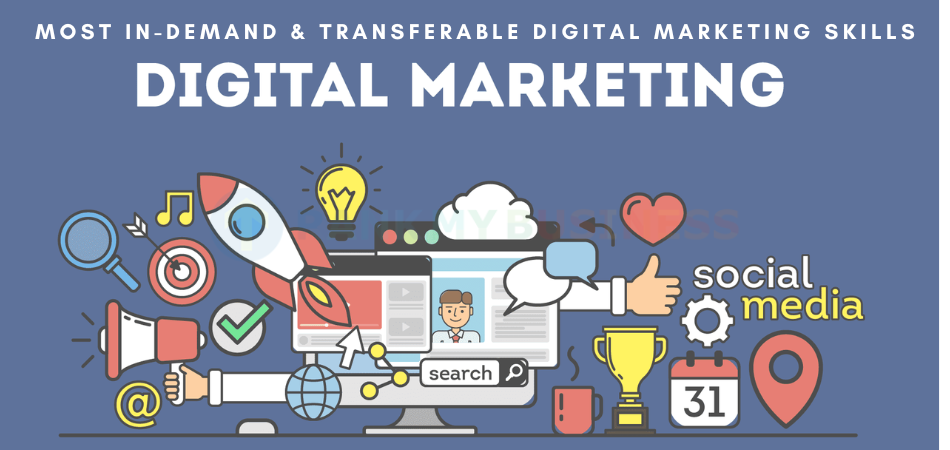
9 Of The Most In-Demand & Transferable Digital Marketing Skills The digital world has completely transformed how businesses connect with customers. From small startups to global enterprises, every organization relies on digital marketing to build its online presence, generate leads, and increase sales. As a result, digital marketing has become one of the fastest-growing career fields, offering exciting opportunities for students, professionals, entrepreneurs, and career changers alike. One of the biggest advantages of learning digital marketing is that the skills you develop are highly transferable. Whether you’re applying for a marketing role, launching your own business, freelancing, or managing a brand, these skills remain valuable across industries. In this blog, we’ll explore nine of the most in-demand and transferable digital marketing skills that employers actively seek and explain why mastering them can give you a competitive edge. 1. Search Engine Optimization (SEO) SEO is the foundation of digital marketing. It focuses on improving a website’s visibility on search engines like Google so potential customers can find it organically. An SEO specialist understands how search engines rank websites and optimizes content, technical elements, and backlinks to improve rankings. Since businesses want consistent organic traffic without relying entirely on paid ads, SEO remains one of the most valuable marketing skills. Key SEO skills include: Keyword research On-page optimization Technical SEO Link building Local SEO SEO analytics Whether you’re managing a company website or running your own business, SEO knowledge helps you attract qualified visitors and build long-term online visibility. 2. Content Marketing Great marketing starts with great content. Content marketing involves creating valuable, informative, and engaging content that attracts and nurtures potential customers. Today’s audiences don’t want constant sales pitches—they want solutions to their problems. That’s why businesses invest heavily in blogs, videos, guides, podcasts, newsletters, and social media content. Successful content marketers know how to: Understand audience needs Write compelling blog posts Create engaging website copy Develop content strategies Repurpose content across platforms Content marketing isn’t just about writing—it’s about building trust, authority, and long-lasting customer relationships. 3. Social Media Marketing Social media platforms have become essential marketing channels for businesses of every size. Brands use platforms like Instagram, Facebook, LinkedIn, X, and YouTube to engage audiences, promote products, and build communities. Social media marketing requires much more than simply posting content. Professionals must understand audience behavior, platform algorithms, content planning, and campaign optimization. Important skills include: Content planning Community management Social media advertising Trend analysis Performance tracking Since social media constantly evolves, professionals who stay updated with new features and trends remain highly valuable. 4. Pay-Per-Click (PPC) Advertising Organic marketing takes time, but paid advertising delivers faster results when executed correctly. PPC advertising enables businesses to appear instantly in front of potential customers through platforms like Google Ads and Meta Ads. A skilled PPC marketer knows how to maximize returns while controlling advertising budgets. Core PPC skills include: Campaign creation Audience targeting Keyword bidding Ad copywriting Conversion tracking Budget optimization These skills are especially valuable because businesses want marketers who can generate measurable revenue through paid campaigns. 5. Email Marketing Despite the rise of social media, email marketing continues to deliver one of the highest returns on investment in digital marketing. Businesses use email campaigns to nurture leads, retain customers, promote offers, and increase repeat purchases. Successful email marketers understand: Audience segmentation Personalization Automation Subject line optimization Email copywriting Performance analysis The ability to create engaging email campaigns is transferable across industries, making it an essential marketing skill. 6. Data Analytics Modern marketing decisions are driven by data rather than guesswork. Companies want professionals who can interpret numbers, identify trends, and optimize campaigns based on real performance. Digital marketers regularly analyze metrics such as: Website traffic Conversion rates Click-through rates Bounce rates Customer acquisition cost Return on ad spend Understanding analytics helps marketers make smarter decisions, improve campaign performance, and demonstrate measurable business impact. 7. Copywriting Copywriting is one of the most underrated yet powerful digital marketing skills. Every advertisement, landing page, email, website, and social media post relies on persuasive writing. Good copy doesn’t just sound attractive—it motivates readers to take action. Effective copywriters know how to: Write compelling headlines Understand customer psychology Highlight product benefits Create persuasive calls-to-action Adapt tone for different audiences Whether you’re creating ads or writing product descriptions, strong copywriting skills can significantly improve marketing performance. 8. Marketing Automation As businesses grow, manually handling every marketing task becomes impossible. Marketing automation helps companies streamline repetitive activities while maintaining personalized customer experiences. Automation tools allow marketers to: Schedule emails Manage customer journeys Score leads Automate follow-ups Track user behavior Improve efficiency Professionals who understand automation platforms can help businesses save time, increase productivity, and scale their marketing efforts more effectively. 9. Communication and Strategic Thinking While technical skills are important, soft skills often determine long-term career success. Great digital marketers communicate ideas clearly, collaborate effectively, solve problems creatively, and think strategically. Strong communication helps marketers: Present campaign results Understand client requirements Coordinate with teams Build customer relationships Create impactful messaging Strategic thinking allows marketers to connect individual campaigns with broader business goals, making them valuable contributors to any organization. Why These Skills Are So Transferable One of the biggest reasons digital marketing continues to grow is its versatility. These skills are useful across industries, including healthcare, education, finance, retail, technology, hospitality, entertainment, and e-commerce. Whether you’re applying for a corporate job, freelancing for international clients, building your own startup, or managing a personal brand, digital marketing skills remain relevant and in demand. Unlike many technical fields where tools quickly become outdated, the core principles of marketing—understanding audiences, creating value, and driving engagement—remain timeless. As technology evolves, marketers simply adapt their strategies using new platforms and tools. How to Build These Skills The best way to learn digital marketing is through a combination of structured education and practical experience. Reading blogs and watching videos can introduce concepts, but applying them in real-world projects builds true expertise. Work on personal websites, run mock campaigns, optimize content for
